
Wired for Change: Marshall Cherry is Empowering Rural Communities
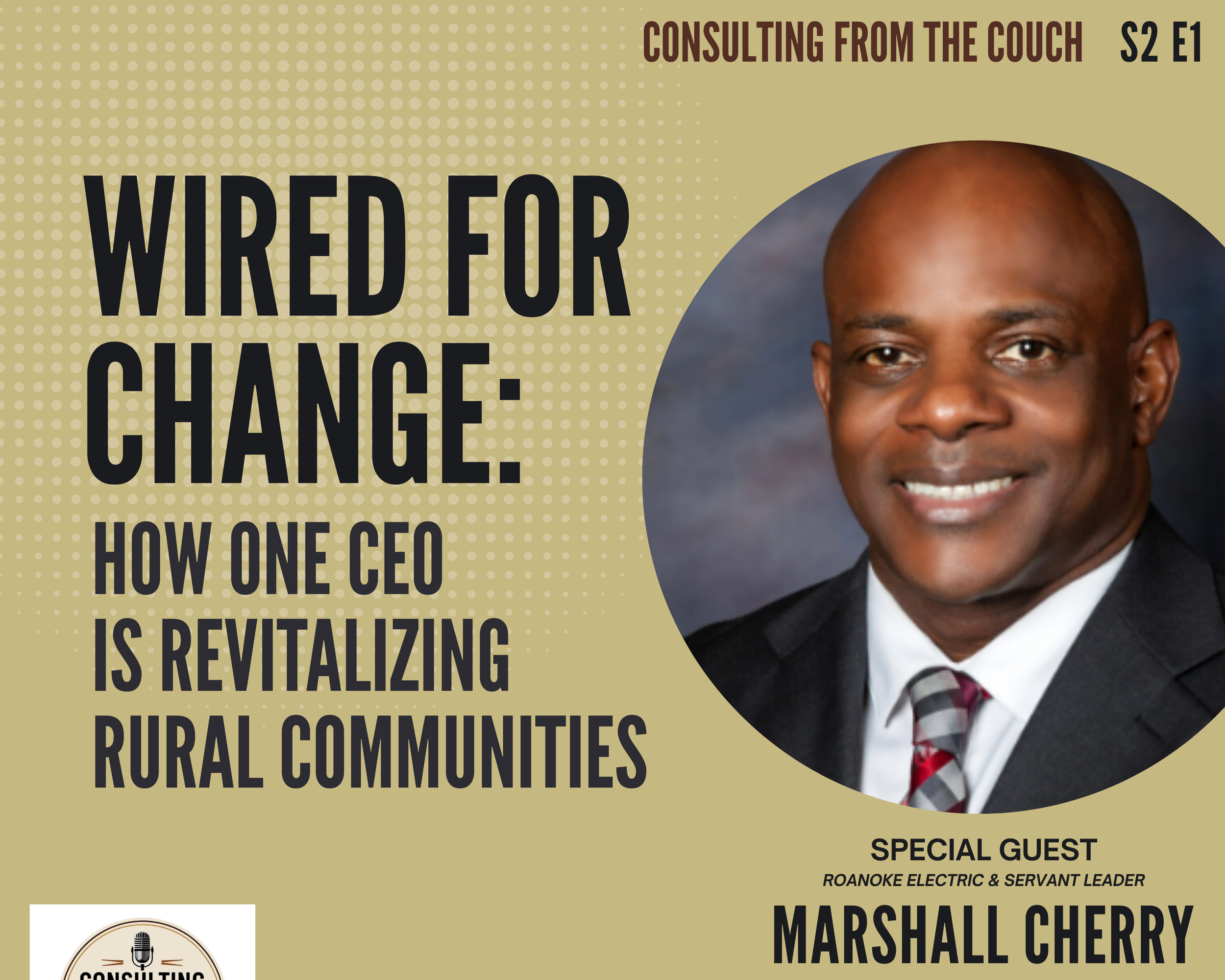
Thoughts from the recent Consulting from the Couch podcast interview with Marshall Cherry, CEO of Roanoke Electric Cooperative, about empowering and leading rural communities and servant leadership.
What if the fastest way to revive a rural region wasn’t a flashy headline but a fiber line and a promise to listen?
That question sits at the heart of our conversation with Marshall Cherry, President and CEO of Roanoke Electric Cooperative. In a region often defined by low growth, aging infrastructure, and economic headwinds, Marshall offers something refreshingly practical: values-driven leadership, disciplined innovation, and an unwavering commitment to member-owners.
His story begins long before the CEO title. From cooperative summer camps as a child to 32 years inside the organization, Marshall’s journey reflects patience, purpose, and steady growth. He did not arrive with a mandate to disrupt. He arrived with a mandate to serve.
And that has made all the difference.
Listening First. Building Second.
Rural leadership is not about dramatic pivots. It is about trust built over time.
Marshall’s philosophy is simple: listen first, then build what people need.
That discipline shows up everywhere in the co-op’s strategy. It means town halls. Surveys. Text alerts. Mobile apps. Printed newsletters for those who prefer them. Emerging AI tools for those who want instant answers. The internal mantra—“communicate seven times, seven ways”—is not marketing language. It is an operational practice.
Listening is not soft. Done well, it becomes a measurement system.
Verbatim survey responses, outage feedback, billing questions, and service metrics shape decisions. When members express frustration about peak demand costs, the co-op responds with on-bill energy efficiency financing. When reliability concerns surface, advanced metering infrastructure (AMI) sharpens outage detection and restoration times. When lighting costs strain budgets, LED conversions reduce expenses and lower system peaks.
Each project connects empathy to execution.
Technology with a Purpose
Technology alone does not transform a region. Applied technology does.
Roanoke Electric has invested in AMI upgrades that improve reliability and empower members with better usage insights. LED conversions that reduce system costs. On-bill financing programs that help households upgrade efficiency without traditional credit barriers.
But the boldest move? Fiber broadband.
For more than two decades, the co-op studied broadband options. When no partner was willing to deliver future-proof fiber with cooperative-level care, Roanoke Electric made a decision: build it themselves.
Today, roughly 80 percent of members are passed with fiber, with full buildout targeted by 2026. Same-day service standards outperform incumbents. Member satisfaction continues to rise.
Fiber is not a vanity project. It is infrastructure with multiplier effects.
Remote workers can stay rooted. Students can upload homework without buffering. Small businesses can compete beyond county lines. Telehealth becomes viable. Workforce training becomes accessible. Economic developers can market not just land and reliable electricity, but multi-gig connectivity.
That trio—reliable power, fiber broadband, and developable land—anchors the Connect 2030 vision.
Culture Drives the Strategy
Infrastructure matters. Culture makes it work.
Inside the cooperative, Marshall cultivates an environment grounded in respect, collaboration, and curiosity. He encourages employees to ask strategic questions—even challenging ones. Monthly Q&A sessions create transparency. Tailored development plans invest in next-generation talent. Partnerships with community colleges and workforce programs build long-term capacity.
Leadership, in this model, is not positional. It is developmental.
Marshall credits mentor Curtis Wynn and national exposure through cooperative networks for teaching him a critical balance: bring home what you learn on national stages and apply it locally with discipline. A broader perspective should always sharpen local service.
Turning Headwinds into Momentum
Northeastern North Carolina faces real challenges: declining population in some areas and the lowest meter density per mile in the state. In a utility model, that math matters.
But rather than retreat, the cooperative has leaned forward.
Every investment must compound. Reduce peak demand charges. Improve reliability. Spread system costs over more kilowatt-hours. Attract businesses that value affordable power and gig-speed connectivity. Convert regional awareness into measurable projects.
This is not an overnight change. It is patient compounding.
And that may be the most important leadership lesson of all.
Advice for Emerging Leaders
Marshall’s message to young leaders—especially those working in rural communities—is clear:
Stay rooted in purpose.
Build trust over time.
Measure success by the lives you improve.
Rural leadership is a marathon. It requires empathy, persistence, and the courage to invest when others hesitate. But when fiber runs beneath the soil, curiosity lives in the culture, and listening anchors the strategy, the finish line starts to look like a starting gate.
If this conversation sparks a new idea or challenges how you think about community impact, leadership, or the future of energy:
Follow the show at BLCConsultingLLC.com
But more importantly, share this episode with someone passionate about leadership, rural development, or empowering communities through innovation. Because sometimes the most powerful change doesn’t start with noise.
It starts with listening—and a fiber line.
To listen to the podcast interview with Marshall, click here